
Sowing The Seeds of Innovation: Vietnam Textile Industry 2025
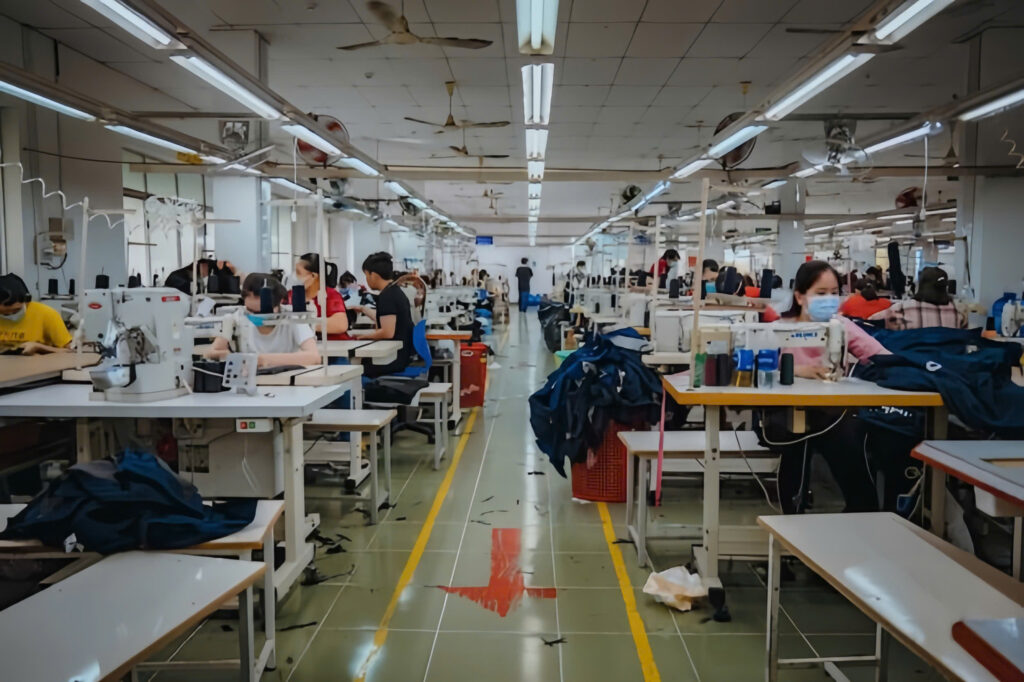
In recent years, Vietnam’s textile sector has become a significant player in the global market and has become increasingly significant in the national economy. As we approach 2025, the industry continues to demonstrate remarkable resilience and adaptability in the face of evolving global opportunities and obstacles.

The textile industry is on track to expand its international market in 2025
Attention to Sustainability Domains
Vietnam’s textile industry will be defined by sustainability by 2025. In response to the increasing global awareness of environmental issues, Vietnamese businesses are rapidly adopting environmentally responsible practices to meet the demands of consumers and international standards. The manufacturing process is undergoing a significant transformation in favor of sustainable materials, reduced water consumption, and reduced carbon emissions.

Environmental responsibility is becoming a key factor in global textile market competitiveness
Innovative technologies are being funded by prominent textile companies to maintain high-quality output while simultaneously minimizing environmental impact. In order to attract environmentally conscious consumers, particularly those in Europe and North America, Vietnamese manufacturers are expanding their sustainable product offerings to include organic cotton and recycled materials.
Export Growth Rate
Despite the global economic uncertainty, Vietnam’s textile and apparel exports continue to increase in 2025. The industry has maintained a consistent expansion rate, while exports in significant countries have reached unprecedented levels, building on the exceptional performance of previous years.

Strategic trade deals and sustainability drive strong growth in Vietnam’s textile exports
Competitive manufacturing prices, strategic trade agreements, and improved supply chain integration are among the numerous factors that contribute to the sector’s successful operation. The application of free trade agreements—especially the EVFTA and CPTPP—has given Vietnamese textile products privileged access to rich markets, hence increasing export possibilities.
Digital Transformation And Industry 4.0
The growth strategy of Vietnam’s textile sector still revolves mostly on innovation. Businesses worldwide are employing digital technologies to enhance the quality of their products, reduce costs, and increase production. Vietnamese textile companies are starting to find advanced production methods, artificial intelligence-powered quality control, and automated supply chain management somewhat more frequent.

Digital transformation enable faster adaptation to increase production efficiency
Manufacturers are able to react more quickly to customer preferences and market changes because of this digital revolution, therefore producing a more flexible and competitive sector. The implementation of IoT sensors and data analytics tools in smart factories is facilitating the optimization of manufacturing processes and resource utilization, thereby promoting economic viability and environmental sustainability.
Market Diversification

Market diversification reduces reliance on traditional routes, ensuring stable growth and new opportunities
Vietnam’s textile sector keeps diversifying its market presence in 2025 in order to cut reliance on conventional export routes. Vietnamese manufacturers are aggressively entering developing markets in Asia, the Middle East, and Latin America, even while the United States and the European Union remain important allies.
Stable sector growth is ensured by this strategic market diversity, which offers a barrier against geopolitical concerns and regional economic swings. It also opens fresh chances for specialized product creation catered to the particular needs of various markets.
Challenges And Opportunities
Notwithstanding its remarkable expansion, the sector has difficulties including growing labor costs, more intense global rivalry, and tougher international compliance standards. Still, ongoing investment in human resources, technology, and sustainable practices is turning these difficulties into possibilities.
Beyond basic cut-and-sew operations, Vietnamese textile producers are concentrating on value addition to create more complex goods with larger profit margins. This development is placing Vietnam as a complete center of textile innovation instead of only a manufacturing base.

Ongoing investments enable Vietnamese producers to tackle challenges and lead in textile innovation
Looking Forward
Vietnam’s textile sector is at the nexus of history and modernity as we negotiate 2025. Embracing sustainability, technology innovation, and market diversification would help the industry to increase its worldwide competitiveness and greatly support Vietnam’s economic growth.
The seeds of innovation being planted now guarantee a bright and sustainable future for Vietnam’s textile sector, therefore guaranteeing its ongoing relevance in an ever more complicated worldwide market.
See VTIC, Vietnam Textile Information Center, for thorough data solutions specifically for the textile sector. Real-time market information, AI-powered analytics, and specialist solutions from VTIC enable textile companies to keep ahead of industry trends and maximize their supply chains.
For comprehensive data solutions tailored to the textile industry, visit VTIC – Vietnam Textile Information Center. VTIC provides real-time market intelligence, AI-powered analytics, and specialized tools to help textile businesses optimize their supply chains and stay ahead of market trends.
